Why Creativity is Important in Business with Vasu Panicker, Music Maker and Business Strategist
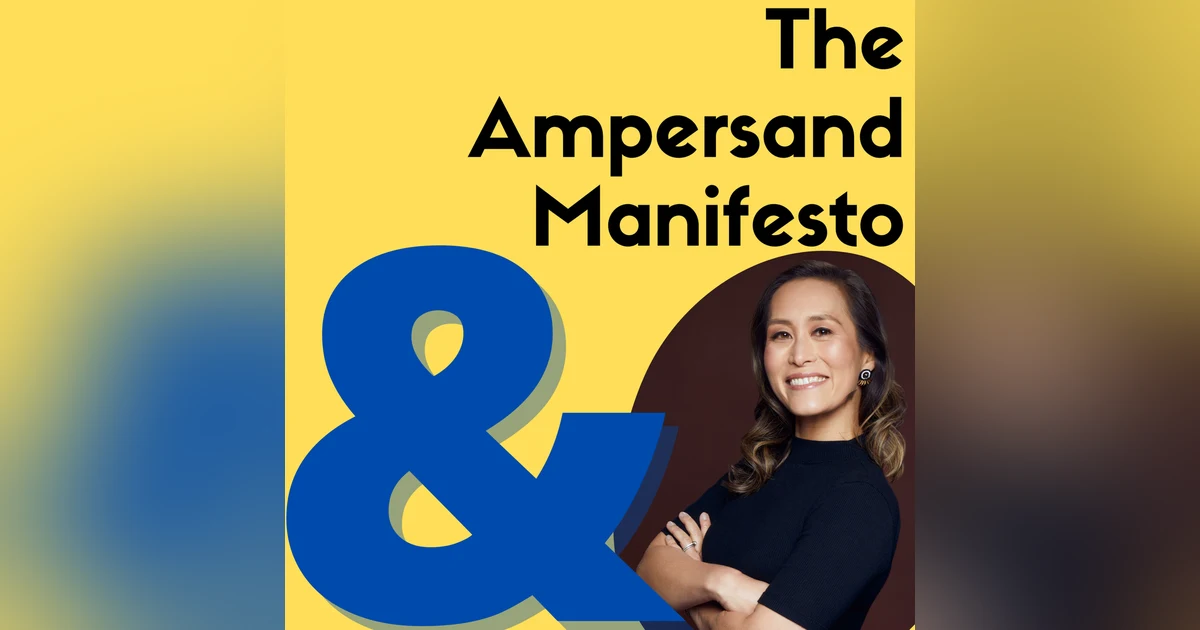


This week, Jessica talks with Vasu Panicker, Music Maker & Business Strategist. Growing up as an arts kid in New York City, Vasu did his undergrad and grad music studies at City University of New York and then built and directed Face the Music, the country’s only youth music program dedicated to works by living composers. He himself is a creative composer and sound designer specializing in contemporary and experimental genres. On the business side, Vasu got his MBA from Berkeley Haas and now works as a Senior Consultant at EY-Parthenon.
You can check out Vasu's new EP on YouTube @vasupanicker and on Instagram @1vasudevan
Are you a high achiever, a leader, or an Ampersand who's recently taken on more responsibility at work? Jessica works with people just like you. She coaches individuals and leadership teams to rise to new challenges - with a unique blend of analytical & creative approaches, plus 18 years of invaluable experience working in companies and startups.
Visit jessicawan.com or BOOK AN INTRO CALL: https://calendly.com/jessicawancoaching/intro-call-coaching
Credits
Produced and Hosted by Jessica Wan
Co-produced, edited, and sound design by Naomi Tepper
Music credit: Scenes From a Memory composed and performed by Vasu Panicker
Theme music by Denys Kyshchuk and Stockaudios from Pixabay
0:00 I think is creatives, especially for those of us who have tried to work who have built great of careers. We're kind of like the original entrepreneurs. There is no template for what we do, what fuels a multi passionate life, I'm Jessica one. And in this podcast, I interview people who straddle two, completely different worlds, I call them ampersands and we are collectively designing the, a Sand manifesta. I'm thrilled to be talking with vasu pun, occur, Management, Consultant and musician. Growing up as an Arts kid in New York City, lawsuit did his undergrad and grad music studies at City University of New York and then built and directed an organization called face the music.
0:53 The country's, only youth music program dedicated to works by living composers. He himself is a creative composer and sound designer Specializing in contemporary and experimental. Genres on the business side, Massa got his MBA from Berkeley Haas and now works as a senior consultant at ey Parthenon vasu. Welcome to the show. Thanks, Jessica. I'm so glad to be here talking to you. So, New York City has clearly shaped you in so many ways. What was it like for a kid? Who loved music to grow up in the Arts? Capital of the world? It was quite an adventure. I mean, There's so much there and I'm so tremendously fortunate to have been able to grown up there.
1:39 You know, that's one of those things that people don't really get to choose. They don't get to choose where they grow up. And so it was an incredible gift to, to have that experience because there were, there were so many opportunities and so many of them either free or low-cost. And so it created this incredible playground, where basically the entire city itself was Was like an art sandbox. Yeah, I'm just super grateful to have had that experience. How would you describe your own journey through musical genres as a performer and a composer? I guess that would begin with my first introduction to quote, formal music training. It was with my 12th birthday.
2:27 I had received my first piano lesson, you know, it was a classical piano lesson and That was my first connection to a musical genre that I felt like I had some sort of maybe control over or rather something that had in a control over me. And at that point that was kind of like my only conception of what being a musician meant to be maybe a formally classical trained pianist and at that point I remember wanting to even be a solo classical artists that Faded rather quickly though when I became a teenager and was really fortunate to go to a major Performing Arts High School in New York and quickly became exposed to so many different kinds of music.
3:16 And when I became a teenager began playing in rock bands, and then began playing a lot of musical theater and started improvising around that age. And so my journey as a creative musician has always been evolving, and I credited it To those experiences as a New York City kid. During your time, as director of face, the music, you transformed, the annual programming to be 90% music of living composers who identified, as either by POC women or queer. What did this mean for you? It meant that I was learning to really listen to the needs of the organization and we had hit that metric or Mark, you know, for lack of a better word and during the 1819 season. And it was the result of listening to what my students needed listening to what my staff conductors were interested in.
4:19 And really listening to what, I think the community of New York City was craving, which was platforming artists and connecting artists to students for whom students could really see themselves in. And so, for me it was it was kind of like this organic Like process of stop trying to be or do what an organization might traditionally aspire to do, and do more of what the members of the community were really craving. What did it mean for the students? I think it was transformational for all of them. I mean, this was a program that served New York City metropolitan kids.
5:02 So so kids from, you know, the greater New York City metro area including parts of Long Island. And New Jersey Westchester whatnot. And so, I think for the students, for many of them, they had expressed to me directly and in other ways that it kind of gave them a transformational experience to work with creative artists and to work with creative musicians for whom they could see themselves in. And I think for me to hear that and to see that change unfold was really impactful because I myself, Self was in New York City kid, very much in their shoes growing up. Benefiting from many of the free or cheaply available wonderful resources throughout New York City.
5:50 You know, it's kind of emotional for me at times actually the see that kind of impact on the educational level? As well as the creative level? You are at face, the music for close to a decade. How when did this idea of potentially going to business school appear on the map? How It come to you. And how did you choose Berkeley that to and itself was was a bit of a gradually unfolding journey? I think the seed was first planted, maybe perhaps myself in January 2016. When I took the reins of face, the music as the Director. And in that position, I was kind of thrown in charge of an annual budget and managing both it Administrative production and artistic staff. And as well as leading a community of about 200 students and all their parents, and I was like, well, I wonder if maybe in the future some sort of business, or managerial training, might be good for me to do a better job at that job. And I had kind of just let it simmer in the back of my mind for about 12 to 18 months before I really picked it up again and Around that time.
7:08 So maybe at this point it was mid 2018, early, 2018. Rather I realized, hey, I'm actually really excited by the strategy portion of what I had done at face. The music. So scaling and refining and strengthening the nonprofit side of things and kind of elevating the the operational and organizational structure so that it could actually just flat. Form better education and better creativity all around and actually found that process itself to be quite creative and whites may be organic and and perhaps even collaborative. And so that's when I started to more, seriously, think about business school and I did some research and I realized, okay. If I'm going to go to business school, I have to begin to think about it, in a very MBA way actually. Well I've got to maximize my output soul. Me, you know, do use the standardized tests and get as high of a score on it as I can.
8:13 And let me try to go to both the best possible school. That also really speaks to me as an individual, and it took a while, I'm not going to lie. It took me two attempts, and multiple standardized testing attempts, and eventually got there, and eventually landed at the best possible place that I actually wanted to be at, which was UC Ali, what's the transition been like coming from New York City and having having that such a big imprint on your life and now being in the Bay Area that has been truly life-changing for me.
8:53 So growing up as a city kid, we kind of many of us grow up with this idea. This image of California being this like mythical legendary land that All is New Yorkers need to make our way over to eventually at some point of Our Lives or at least many of us do. And that was certainly the case for me as well. I had never lived for the long term in another place, besides New York City. And I think it was because of in California's had so much impact on American and therefore, International culture through the commercial music business and SoCal through Hollywood and then over the past couple of decades, obviously.
9:37 The tech scene here in the Bay area. So, I had always grown up thinking of California and and just thinking of the sunshine and thinking of the water and thinking of the shore. And when I got out here, all of those things, kind of hit me at once. I mean first and foremost is the wildfires. Hit me and that's when I realized. Wow, I mean with such stunning beauty comes also the reality of Nature and also the reality of what, you know, our world Facing as well. But I ended up, for example, leading the hiking Club at Berkeley Haas and I had actually never been on a hike before in my entire life.
10:18 Now I probably walked more than anybody else. Being a native, New Yorker and walking around everywhere. I feel like my entire being had just kind of dissolved and crumbled in front of the, of this nature that we're surrounded by, you mentioned commercials and consumerism. And how A lot of that has stemmed from California and spread across the u.s. and across the world. Your current creative project uses public domain, video footage with you, adding original sound to it, you described it as sonically painting. What you see confronting themes of consumerism advertising and need what inspired this project. I was taking core marketing at UC Berkeley and confronted, you know, multiple times.
11:07 Week with ways to increase engagement and ways to increase sales and then at the same time, it was around December 2020. And I was trying to play with ways to revitalize, my own creative practice, and I've always thought of creativity as a practice. And one day, I was watching a TV show is actually Hannibal, which I highly recommend and there was a scene in In the third season, where one of the characters is walking across an Italian church or Cathedral and the sound design, it was just literally, just just, like, painting.
11:48 The Sound was painting, what was being displayed on screen? And I was so moved by that and so I immediately started researching ways to get compelling video footage in my lap and I discovered archive.org and the many sources of video footage that are there. And I was really Rock by a collection of reels of classic, mid-century black and white television commercials. And when I was watching them, I was experiencing all the many things that I was studying in my core classes. My core MBA classes at UC Berkeley as well as I think confronting my own role, as a consumer, as an MBA, as an American with all these powerful forces and I was just so, immediately compelled to start painting sonically, what I was seeing What do you hope the listeners will gain when they hear and experience these Sonic paintings? I'm hoping that they can experience it. First of all, on the multi sensory level that it is both audio and visual.
13:01 I'm hoping also that experiencing the two together would help listeners reflect on the contents of consumerism capitalism energy, Shin buying more and more and more waste production. I hope it would help listeners confront both the severity of what we're up against as well as approach it with a sense of childlike lightheartedness. I mean because we have 24 going to try to turn things around, or make a shift towards more sustainable future. Yes, there's an urgency, but if we think of it as just so utterly depressing, we might not want to confront to the hole.
13:44 So if we can bring a sense of creative play to it, I think I would be happy of listeners. Walk away with that. That's an excerpt from shut off your eyes volume 1.
14:26 It's track number for entitled scenes from a memory and The Full Experience is up on YouTube. You really have to experience this album with the visual context. I don't want to give away too much, but this particular scene involves a boy, a man and a coveted. Box of Cracker Jacks. I have to say when I listen to it at the same time I felt this kind of sinister foreboding theme but then there were many moments when I laughed out loud to think especially with these older commercials and there's consumerism and there's also these social constructs of, you know, this type of person should be doing this type of thing and there's a lot of history in there that I think. You are commenting on in a very fresh way. Thank you.
15:23 Let's pause for a moment to reflect on this question. How do you social constructs affect how your seen in the world outside of Hosting this podcast? I partner with leaders in the workplace as they rise up, perhaps you've gotten a promotion. I landed a new role or taken on a lot more responsibility and you need a trusted sounding board to support you as you support your team. I coach individuals and Leadership teams to rise to the challenge with my a and blend of analytical and creative. If any of this intrigues, you reach out to me at Jessica one.com.
16:07 Now, back to the show, how did you land on, man? And Consulting as your next iteration of that strategy work. I think it's because when I was director of face the music during that time, I realized that I had a passion and a skill for strategic problem solving that. I actually never knew that I ever had, and never thought as a teenager, as a New York city musician. I never once imagined that, I would be into that. And then as I went through business school, as it turns out, I had a passion. Also for things like finance, and for things like developing Frameworks to solve specific problems. Things, all of which that for me as a New York city musician growing up, I had always kind of sectioned those things off for being for someone else and not being for me. And so through this process of self-discovery, I was researching will what our roles or Or sectors that I could kind of apply strategic problem solving to. And there are so many and so many sectors require that. And so there are so many needs for that, including the nonprofit world and whatnot.
17:27 But I kind of wanted to sink my teeth into like a more rapid fire sector and I wanted to be solving different things at, you know, within a year. I wanted to be confronted with different Industries and a variety of problems and so Management consulting always seemed to me like that's the best possible initial output and so far, I would agree with that. It's only been about 5 months for me, but I've already had to learn about things that I knew nothing about. And I've had to get good at them very quickly and there's always been a part of that, you know, so being confronted with something new and figuring it out to the best possible extent that I can. But I've always been intrigued by I Kind of like the challenge. I like the excitement.
18:17 I like the I like the moments when I feel like I can't do this and I'm really bad at it and what am I get up? Get myself into and then I step away, I take a breath and maybe go for a walk and then I'm able to come back to it with a fresh perspective. Or I take that frustration, and then I go sit at the piano and reports of it. I wanted the variety and I wanted to complexity. How do you think your life as a creative prepared? You to go into Consulting? I think is creatives. Especially for those of us who have tried to or who have built great of careers. We're kind of like the original entrepreneurs, there's no template for what we do.
19:06 There might be people who have qualities or who have built. Careers that have elements of what we want. And maybe at times we think that we want to be just like one of our role models. But in actuality we can't because we are ourselves. We are our individuals. And so we are the original entrepreneurs in an area where there is actually very little Financial benefit. And so we're doing it for a different reason. And we're doing it for self-fulfillment. We're doing it because we need the therapy. P.f. being seen and being identified in that way. And so we're kind of figuring it out for ourselves.
19:47 And I think that at least for many management, Consultants, your kind of, thrown into a project, a new project, a new scenario, new client, new sector, and you have to kind of figure it out and I think creatives actually have a tremendous amount of skill set. And that field of just being thrown into a new situation. Ation and figuring it out, whether it is for Creative building, a medium to long-term career, whether it's approaching a new collaboration or whether it's trying to figure out that new plugin for this new kind of music software that you're fiddling around with because the demands of Distributing music require it.
20:32 So there are a lot of connections between the two besides your work in Consulting and in music, you are a meditation. Practitioner now this meditation connect to the other areas of your life. Meditation has given me a foundation, I think for experiencing and connecting with both of these areas of my life. I started meditating in 2008 and it was actually because my piano teacher at the time, had suggested that I take a course on breathing and meditation. So, in 2008, I was coming back to Formal classical piano studies after taking about a three year break when I'd finished high school I stopped all classical studies and I was working as a freelance pianist primarily as a vocal accompanist in musical theater and rock, and pop and many other genres, then I was coming back to classical piano in order to actually do a music degree at CUNY, which I ended up self designing. But when I was sitting at the piano, my teacher would notice that I was really tight and tense and she had suggested. Hey, why don't you take this course on meditation and breathing breath work.
21:47 And so, I did and I was 21. It was a summertime and I took it and I was like, wow, this is incredible. Incredibly liberating and I basically never stopped from that moment. My practice evolved into a number of different ways and it's primarily over the past, decade have been focused on practical. ACTA sitting in the Tara bada tradition and I've been very fortunate to also be working, you know, privately with a teacher who's helped me refine and and deepen my practice. But it's really given me this Foundation, almost this stage of which to receive the different Joys and challenges of both being a musician and a Management Consultant because they're both and so it's helped me. he receive and respond in almost like an agile way in which I can open up to be ready with almost like an unconditional friendliness to whatever is thrown at me, that doesn't mean that like I'm totally calm all the time but it's helped me develop tools to respond to the many things that pop up what has fueled you to keep going in both the business world and as a creative, I think The gradual realization that I am not just a musician or am I just a business person or Management Consultant and that
23:20 I'm actually something different maybe not even exactly 50% of the to the first thing that I had ever wanted to be when I was a child. First thing I ever wanted to be was an artist a visual artist and then I recall actually when I got into kindergarten I wanted to be a lawyer and so and so forth, you know? there's always been this titrating between wanting to be, or do something or have this identity as a creative and having or being identified as somebody whom I consider can kind of interact with the world of humans or the material world rather and even so, you know, in high school I wanted to be a professional musician and then when I first started college, I wanted to actually focus on social sciences and so there's Always been this.
24:11 What I call titrating between the two to the point where now after having had a professional music career and now embarking upon a professional business career, I feel like I'm kind of hovering between the two and creating this middle path for myself. What I have noticed is my musical creativity. Needs the tension that I develop or experience from other parts of my life So it needs kind of. It's the creativity is actually fueled by some of the work that I do as a Management Consultant or as a business person and as a business person, I think that my ability to perhaps solve or articulate or work, through problems is heavily influenced by my creativity as a musician. And so really I'm at this point where I can't have one without the other, they really complement and Support each other.
25:11 What advice do you have for people who are pursuing or are thinking of pursuing an ampersand life, I'd have to Broad or maybe there are two broad areas that I would suggest looking at. So one is the introspective and to would be perhaps the Strategic. So on the introspective side, do your inner work, do your inner reflecting and whatever way that is for you, whether it's going for a Like or whether it's being by the water or whether it's being surrounded by the people, you love and use that inner inspiration to dive deeper into questioning and answering like who it is that you really are and how you want to be seen and identified and then secondly on the Strategic side, I think it is important to actually figure out a game plan to make that happen. You can pull up like a digital whiteboard or a real whiteboard Breakout some spreadsheets or maybe even just a Google doc and actually jot down your ideas shot down a plan. Take note of people who have developed careers or developed things that inspire you and if you can reach out to them and figure out how it is that they got to that point. What do you think should be in the Ampersand Manifesto? I would look at the Ampersand manifest to in perhaps three ways.
26:38 There's And it's building a bit off of my previous response. So one there's the inner to their strategic and then three there's I think the communal. So on the inner side obviously you've got to do your inner reflecting to figure out what is truly most important to you on the strategy side? It's important to I think make that game plan because you're actually creating something that's unique and in many ways has never been done before. And then three in the communal, you've got to think about how your path. The passage you're forging is actually affecting the people around you. You know, whether it's your immediate family or whether it's your colleagues at work or other multiple layers of community vasu.
27:26 It's been such a pleasure talking with you today, folks. You can check out vassos, new EP on YouTube at vasu panicker. And on Instagram, one vasudevan will also link to these He's in the show notes. If you liked this show hit, like, subscribe and share with your friends and fellow ampersands. I had a chance to reflect on my conversation with vasu and I wanted to share some of my takeaways with you one. I love this idea of creatives as the original entrepreneurs and especially thinking about the very transferable skill set of being able to be thrown into something new and just figuring it out.
28:10 I've worked at several startups myself and this skill always comes up when we're hiring. We need to remember that creatives aren't just skilled at piano or performance but at a more fundamental level of being able to move forward in a space of discomfort to in our society, we often talk about feeding our creative sides, which tend to be more starved for attention, but there's also an opportunity Tea for creatives to feed their analytical strategic or business side. Whole human beings have multi-dimensional sides and for lifelong Learners and ampersands and might be about developing what's under development three. I loved vasus framework for the Ampersand. Manifesto the inner work, the Strategic, and the communal. I'm picturing this visually, as concentric circles building our I think this is a great way to think about my own a sand life and which of these areas might warrant more attention at the moment.
29:18 It's important to say that on the strategy side, be careful about, not trying to maybe completely emulate, or try to copy or imitate what you see in other people. Because the truth is, it's figuring out your own individuality that I think will help you shine more


