In the Pursuit of Truth with Brad Balukjian, Entomologist and Journalist

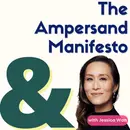


Jessica interviews Brad Balukjian, Entomologist & Journalist. Brad studied journalism and island biogeography at Duke University and earned his Ph.D. in Environmental Science from UC Berkeley. Brad founded the Natural History and Sustainability program at Merritt College, where he teaches today. In 2020, his first book, The Wax Pack, reached #7 on the Los Angeles Times bestseller list and was named one of NPR's Best Books of the Year. He's now working on a new book, The Six Pack, to be published by Hachette in 2024, about myth vs. reality and shifting identity in the world of professional wrestling. He's written for National Geographic, Smithsonian, Slate, Rolling Stone, and many other publications.
You can check out Brad's work at bradbalukjian.com.
Are you a high achiever, a leader, or an Ampersand who's recently taken on more responsibility at work? Jessica works with people just like you. She coaches individuals and leadership teams to rise to new challenges - with a unique blend of analytical & creative approaches, plus 18 years of invaluable experience working in companies and startups.
Visit jessicawan.com or BOOK AN INTRO CALL: https://calendly.com/jessicawancoaching/intro-call-coaching
Credits
Produced and Hosted by Jessica Wan
Co-produced, edited, and sound design by Naomi Tepper
Theme music by Denys Kyshchuk and Stockaudios from Pixabay
0:00 In a weird way without realizing it doing a PhD on Tahitian bugs. Prepared me to write a book about professional wrestlers or baseball players, what fuels, a multi passionate life, I'm Jessica one. And in this podcast, I interview people who straddle two, completely different worlds, I call them ampersands and we are collectively designing. The Ampersand manifest, I'm thrilled to be talking with Brad Bullock Jian entomologist and journalist. He studied journalism and Island biogeography at Duke University and earned his PhD in environmental science, from UC Berkeley grad, founded the natural history and sustainability program at Merritt College where he teaches today in 2020. His first book, the wax pack reached number seven on that Los Angeles Times.
0:57 Best seller list and was named one of em. Aras, best books of the year is now working on a new book, The six-pack to be published by her shet in 2024 about myth versus reality, and shifting identity in the world of professional wrestling. He's written for National Geographic, Smithsonian, slate Rolling Stone. And many other Publications Brad. Welcome to the show from one a sin to another. Thank you very much Jessica. I'm thrilled to be here and thrilled to see that on your list of A Sands from past. Guess there's a lot of a lot of singers and a lot of music. And so I thought, okay, it's good that we have an entomologist in the mixer, you're actually the first entomologist I've met and definitely the first entomologist and journalists that I have met.
1:49 I'm curious when you think back to Brad as a child, what were some early signs that you might be leading the life that? Lead today. Well, it's funny. I went when you said that, I was thinking it's like, kind of what a psychologist or therapist will say like what would their first signs that you were a little bit off? Because that's kind of the truth is I, when I think back I was a weird kid and in a way that I'm very proud of, I grew up in Rhode Island in a pretty rural area. Really interested in the outdoors and nature. I was the kid that was going in the backyard and putting bugs.
2:29 In jars. So I could observe them and wanting to know what they were. And it's kind of funny. Now at age 42, I realize I'm still out going outside and putting bugs in jars and trying to identify them. So there's definitely a consistency in a through line in my passions and my interests, they go all the way back to Childhood. I also was the kind of kid growing up that was always wanting to document everything I would insist if our family Watched a movie that everybody rate the movie and have know how many stars you give it. If we went on vacation, I had to take notes of everything that happened and evaluate every day and so it's no surprise that I also have obsessive-compulsive disorder and I don't say that like glibly, I really do. I've been diagnosed and I've been to therapy and all that and it doesn't really disrupt my life too badly anymore, but it definitely is a tendency that also seeps into my professional work.
3:30 Your cultural background is Filipino, Armenian and Western European. How do you think your multiple identities and cultural upbringings affect how you see the world? Well, actually, to be honest, growing up, I probably saw the world very culturally white. I grew up in a town and very little diversity, my mom's from the Philippines, she would cook Filipino food and she taught me certain words and Tagalog and all that. But it wasn't like I grew up feeling like I was that Filipino and I think it wasn't until I moved to the Bay Area and especially after graduate school. I went to Cal, which is ostensibly diverse.
4:13 You know, you look at the actual statistics of diverse University but I didn't find it to be particularly diverse in walks of life. Ways of thinking, I found it to be kind of homogeneous in many ways and it wasn't till I still, I started teaching at a community college at Laney College in Oakland And now Merritt College in Oakland, and I truly had a diverse in every axis of identity. Had a truly diverse population. I was working with that, I started to understand my own privilege a lot better and also to get in touch or to at least appreciate my own, multiracial identity a little bit better and for me I really I enjoy being such a strange mix. You know, there's not a lot of Armenian Filipino Western Europeans out there.
5:02 And I've come to really enjoy that identity as being being a real mashup of cultures and seeing how that plays out in different parts of my life. Let's dive into the wax pack. So you posed a question is there life after baseball and you ended up taking this solo trip spanning over 11,000 miles through 30, states to find all these former Oh, baseball players from a pack of cards in 1986. An amazing premise. So when this idea came to you, how did you know that you had to follow through with it? Yeah, that question kind of gets at the root of my professional motivation. I think which is passion.
5:48 And the fact that I remember when I was struggling early on trying to get this project off the ground and I was considering, do I even do this? And a friend of mine said, This book is inside of you, it has to come out. It doesn't matter whether it does, well, financially, or any of the details. It's like a story that you need to tell for yourself that provided some clarity about needing to follow through that. I think part of it is I've always prided myself on being a doer and that I have a lot of ideas and I think it's important for me to actually execute Them, it gives me a sense of satisfaction to follow through and so I knew it was a good idea.
6:35 Everyone, I told was that, oh, that's a great idea. And even after it came out, a lot of people were like, oh, I'm so jealous. I wish I had thought of that. And my thought what I hear that is yes, but it's the follow through. That makes the difference. That's it's easy to have good ideas. It's hard to make them happen. How do you think this follow-through comes up for you in your work as an entomologist? And as a professor. So I finished my PhD at Berkeley in 2013, and my research, my dissertation was on 17 species of insects that I discovered that live in Tahiti and describing them and what makes them unique and documenting their existence. And when I finished graduate school, I made a very conscious decision to get off the what I call the bullet train of Academia which is that when you do a PhD, especially in a place like, Cal the Ian is okay.
7:30 Now you go on and get a postdoc and then you try to get a job at a prestigious research University, where your tenure track professor and I said, no, I don't want to do that. I'm going to completely Go a different direction where I wanted to be in an environment where teaching was prioritized over research. And so I started teaching you a community college and what I made that decision. It basically meant that any professional incentive that I had four Actually publishing my PhD research, went out the window because when you write a PhD you don't have to, actually have it. Peer-reviewed and published. And so, for the last 10 years, this this project has sort of loomed in the back of my head and something that I wanted to finish all those hundreds of or insects who gave their lives for me to do my research, like their their, their desk could not have been in vain, right? It has to get documented.
8:25 And so, Slowly but surely over 10 years. I have chipped away at that and just this past month, submitted the paper for publication to a scientific journal and if all goes well that will come out sometime this year. So that's sort of the ultimate, you know, ten year lag in in follow-through but I never could let go of finishing that project. Your Love of Oakland comes through a lot in your book. What is it like for you being an ampersand in Oakland and in the Bay Area? How does it inspire you? I think Oakland is a great place for a Sands because it's an incredibly creative.
9:15 There's a lot of Creative Energy. There's a lot of outside the box thinking that goes on here and There's a lot of people that I think are attracted to that energy of not being labeled as one thing and so you're among the like-minded people who appreciate that, you don't have to fit narrowly into the kinds of boxes that most of the society likes to try to put us in whenever I think about leaving here because you know, there's downsides, there's an insane cost of living and so forth. I'm always like, well, I could do that, I could probably have a house in most of the country, for what I paid, for my one-bedroom apartment, but I'd be sitting in a house surrounded by people. There probably are not a sentence Oakland. It's also within the ecosystem of the Bay Area, to me is attractive because it's sort of the underdog to San Francisco and that's another common theme in my work. Both is a journalist and an entomologist is I am always drawn to the the thing that everyone's not interested in or talking about or maybe they are in, they will be interested. If you can tell the story in the right way, what has your creative process been like for the six-pack? And how's it been maybe different from last time? Yeah, the six-pack is much harder. So much harder book than the wax. The by fact was hard.
10:45 So that's telling you something. And yeah, I always tell people, the hardest thing I've ever done is still writing that dissertation. And I, It will always be the hardest thing I'll ever have to do. But the six-pack is harder because it is more ambitious in the sense that in the wax pack. It was a very linear narrative. Like, hey, here's you going on the road with me for 60 days and kind of what happened every day with me. Interspersing flashbacks, and it's part Memoir. So, I talk about my personal life and my dating Misadventures and Adventures, and what is it like being a single guy in my mid 30s? Who thought I would be married and kids? AIDS and all that, you know, I think, unless you're like incredibly vain you can only kind of do that once it's not, you know, it's not like my life.
11:30 Is that interesting? That seven years later, I'm going to go talk about my Tinder dates on the road again. I mean I could do that but to me that's not serving a purpose that I want to have in this book. So this book will be similar to the wax pack in that. I tell the backstory and the human stories of these pro wrestlers and there's another level. Of Engagement because these wrestlers live these fake identities when they were in character. And so it's a truly unique and bizarre subculture in which these guys were expected to almost live their character 24/7, like, Hulk Hogan would go out in public and you would never be able to take the costume off right here.
12:15 His real name is Terry Bollea, but no one would ever call him Terry, if they saw him and there's no other Analog to that. You know, if you're Harrison Ford no one's going to call you Han Solo on the street, right? I'm really interested in investigating what that does to a person. The sort of more personal Memoir part that occupied a certain amount of real estate in the wax pack, is now going to be taken up by telling some of the history of how this weird art form of wrestling came to be and how Vince McMahon and the WWE became this Wall Street Empire. And that is a lot more research historical documents. So having to do this huge body of research, detective work, and then synthesize that with the actual reporting from being on the road and being with these guys and their living rooms and all of that, just like I did with the wax back. How does it feel now to be a writer in your 40s as opposed to being 34 and Going on this adventure. How do you think you have grown as a writer in a person? Yeah, I've been thinking about that because when I stop and realize oh yeah, that mean 34 242 is not trivial that's an eight-year difference.
13:36 And I think maybe some of my disinterest in doing the personal stuff. Is also a factor of getting a little more mature or getting a little bit older. My the circumstances of my life haven't changed that The I'm still single and don't have kids or anything like that, but I think that I feel more sure-footed as a writer, which I think is good. I think there's this recognition that if a writer can be said to kind of have their Prime that I feel like I'm there in sense of like this is where the the sort of that perfect intersection of relative Youth and experience come. Together and an acute understanding that his temporary by definition.
14:26 It's not going to last forever. So I have this feeling of really wanting to enjoy this time and work on these projects but I'm liking where I am right now. And in terms of my command and my voice in my writing process, let's take a moment to reflect on this question. Are you in your mix between Youth and experience outside of Hosting this podcast? I partner with leaders in the workplace as they rise up.
15:08 Perhaps you've gotten a promotion landed, a new role or taken on a lot more responsibility and you need a trusted sounding board to support you as you support your team. I coach individuals and Leadership teams to Rise to the challenge with my Ampersand blend of analytical and creative. If any of this intrigues, you reach out to me at Jessica one.com. Now, back to the show, you shirt that in all of your projects whether it's a book, an article or teaching a class, you try to combine both sides of the brain and embrace both and thinking in your book, you describe how your skill for research, LED you to pursue She and journalism as well as tracking baseball stats and what other connections do you make between these worlds of Science and writing?
16:03 Well, I think that there's actually an incredible overlap between the entomology in the journalism where the science and the writing in that they're both ultimately driven by Deep curiosity and a undertaking, a certain process somewhat Stomach process or systematic process, to try to find truth or answers in science and in journalism, you are Guided by some question. You want to answer? You have some inkling of a hypothesis. You go out there and you collect data and you feel the work to try to test that hypothesis then you synthesized at all. And you come to some conclusion about whether or not you accept or reject that hypothesis and why write that scientific method really underlies?
16:52 Is what journalists do. And so, in a weird way without realizing it doing a PhD on Tahitian bugs, prepared me to write a book about professional wrestlers or baseball players and that's the beauty of a PhD is that it is teaching you how to think, deeply and critically. And I always thought it was. So myopic of academics to say that. If you didn't go on and become a professor in Academia with your PhD, you somehow works for wasting or squandering your Or education. And it's like, no, getting a PhD isn't about producing more. People like your advisors. It's about teaching people to think deeply and critically about the world. In this era of fake news and Distortion. This notion of the truth is at the Forefront of lots of people's minds.
17:42 How does one get to the truth? When there's always a person in this case you at the helm of telling that story, I also I've been thinking a lot about this notion of Truth as an aspiration and a concept because journalism is I think about trying to get truth and science is also about trying to get truth. And yet what I've Realized being both a journalist and a scientist is are the limitations caused by being human. Our own Humanity on our ability to 100% ever get to truth. I mean, I do believe that truth exists out there in the world independent of humanity. I know that like if I'm trying to understand how many species of insects are in Tahiti and how they evolve, there's a there's a real hundred percent answer that explains all that. But when I go out and even if I spend seven years, Years collecting insects, and doing all the analysis. There's no way I looked in every single place on those islands. There's no way that I didn't miss something. And so what I am concluding is my best effort at truth but it's going to come up short somewhere and that's the beauty of science is that it's iterative.
18:53 Now someone else comes around, they have more funding and more data and they can improve on my approximation to truth. But even there the probably never going to get to 100%. It's even more. In journalism where yes I'm going out and I'm interviewing these wrestlers, I'm trying to tell my reader. This is what this person's life was all about this is what motivates them. This is who they are. But everything I'm saying is through the lens of one person. One 42 year old mixed race man, right? So there's all timidly distortions that are going to happen as objective as anyone tries to be when they were a journalist it's like you're never able to look at That thing without some lens, that's going to slightly alter the reality of what you're seeing.
19:41 And so and all of that I realized ties in beautifully with professional wrestling. This wrestling is always been about myth versus reality. They're projecting. This thing is wrestling fake or real and and the reality is in wrestling. Just like in in everything else I'm talking about it's somewhere in between there is no 100%. Truth that we're going to get to and that's okay. People like to politicize this and attack it. Say well if you can't say something is 100% true than it should be doubted, right? But that's the I think me an unsophisticated way to look at this issue of Truth. This is fascinating and it gets me thinking about just what is the truth, right? Just even coming from a piece of music or a piece of art, how would you even answer that question what has filled you? You to keep going as both an entomologist and a journalist never stopping learning while still being able to pay my bills yesterday as I'm writing and researching this book I'm sitting there in the writers Grotto in San Francisco watching wrestling clips from 1984 on YouTube and I'm like this is what a lot of people are doing procrastinating in their cubicle when they should be working and I'm doing this, this is my job. I get to actually watch this for my job, I really is great. Right now called 4000 weeks, which is a, which I don't have you heard of that, I've read it.
21:10 Yeah. Okay. Men. Yes. Great book because it's the premises, you only have like, 4,000 weeks in your life which is actually way fewer than most people would ever guess. If you ask them to guess, how many weeks are in their lifetime. And what I love about this book is its emphasizing the value and the wisdom of limits which is not something we're accustomed to doing, I think as we go. Actually, when we were younger, we like to think of infinite opportunity and doing whatever, you know, seeing it all doing it all making more time. And to me, it's been more valuable to realize that we can never do it. All, we can never have it all that limits, impose a healthy structure in our lives.
21:55 And that it's about letting go of not being able to do it all. And so while there are all these projects and things that I would love to do, Career. I'll never do anywhere close to all of them and so I just want to be able to pick the ones that are the most inspiring and just continue to do that as long as I can and make a living off of it because there's no shortage of things that I want to learn more about. What advice do you have for people who are pursuing or thinking of pursuing the Ampersand life? I teach a class on environmental careers at Merritt College about how To get a job in the environmental sector and I use this concept that's very similar to the A and I call it hybrid Vigor and biology hybrid, Vigor means when two individuals from different species interbreed and their hybrid, Offspring actually are more fit than either parent because mixing genetic diversity, produces more fit individuals from World fit Offspring. And the idea is that you don't have to just do one thing, you can combine My advice to people that are interested in that would be to be honest about the pros and the cons of choosing that life.
23:13 If you are pursuing multiple passions, you might have to give up a little bit of Financial Security. So, be honest with yourself about some of the shortcomings and then I think, you know, don't let society's expectations or dictums dissuade you from choosing that At life because it's an unconventional path. Think people that do this are often, do you know they're Guided by their passion so just continue to prioritize the passion. What do you think should be in the Ampersand Manifesto? It's the same advice that I would always give when writers contact me about their projects, which is before I give advice a specific advice on how to go about any given project.
24:00 The first question I asked somebody is what is your motivation? What is your goal? What is, what is underlying this so? And then whatever that is be honest about what that is. So if you're somebody that is going into something because you just want to make a lot of money, then, okay, then be honest about that. If it's about your ego, okay? Be honest about that. If it's about your passion, okay, be honest about that. Being able to identify what it is. Why it is that you're interested? Add in whatever it is, you're pursuing, is really critical there and I think not again in terms of the manifesto, don't be discouraged by having two things that are so disparate no one, you know, entomology and journalism. They don't overlap in many Venn diagrams probably but there is a lot of overlap actually between those worlds if you really dig into it.
24:58 So Embrace that passion that creativity, that's fueling those two different things. Yes. Brad. It's been such a pleasure talking with you today, folks. You can check out Brad's work at Brad, baluch Jian.com and there's a link in the show notes. If you liked this show hit, like, subscribe and share with your friends and fellow ampersands. I had a chance to listen back on my conversation with Brad and I wanted to share a few key. Takeaways one rods Quest For Truth manifests itself in both, Journal and internal ways. It drives his work as a scientist and journalist, and it's also an internal honesty about what he wants. For example, prioritizing teaching over research, when he got his Ph.D, he didn't take the quote-unquote expected, track it primarily saw his Ph.D as a way, to develop deep critical, thinking about the world.
25:59 I really admire the strong values that Brad has about his work. And why he does it. To there's a theme of tenacity and follow-through, not letting go of ideas that might be right eventually. Even if you're not sure that, they're right for right now, Brad's description of the 10-year project for his PhD research. Reminds me, a little of Lear owns Book Project a few episodes ago. The idea if it grabs you, it doesn't let go even if that might move from the back burner to the front burner and Back Again. Actually, if we take this kitchen and Elegy even further. How delicious is a stew that simmers for a long time. Three, I'm so intrigued by this idea of hybrid Vigor. As applied to one's career, I'm not a scientist myself. So when I googled this I just related it to an idea as a dog lover.
26:58 Generally mixed breed dogs are healthier and have fewer health problems than purebred dogs in the business world, we can think of this as pursuing multiple passions actually making you stronger healthier and Building more resilience, I wonder if there is a certain level of physical or mental Fitness in here to listener, if you have read or research, this drop me a line. Super, super interesting. If I had to I guess summarize my professional goal or what guides me and even personally really the pursuit of truth because it's a recognition that it's always Process.
27:45 You're always chasing it and you may never get it and that's okay.


